 VIT
Which vitamins do you actually need? How to tell, and which to skip
Stand in a supplement aisle for a minute and you'll feel it: everything promises energy, immunity, focus or a longer life. A multivitamin "just in case", vitamin D because everyone takes it, magnesium because a friend swears by it.
Here is the less exciting truth: most healthy adults who eat a varied diet don't need most of it, a few people really do need one or two things, and some supplements can do harm. The trick is knowing which group you're in. That takes a test, not a guess.
Do you need a multivitamin?
Probably not. In 2022, the US Preventive Services Task Force reviewed 84 studies with almost 740,000 people and found too little evidence that multivitamins prevent heart disease or cancer in healthy adults. A multivitamin won't hurt most people, but it won't make up for a poor diet either, and it gives a false sense that the job is done.
The same goes for popular single vitamins. In a trial of 25,871 adults followed for five years, vitamin D pills did not lower the rate of cancer or heart attacks compared with a placebo.
Who actually needs a vitamin?
Some people do, for clear reasons:
| If you... | Consider | Why |
|---|---|---|
| Could get pregnant | Folic acid every day | It lowers the risk of serious birth defects in the first weeks, often before you know you're pregnant |
| Eat no or few animal foods | Vitamin B12 | B12 comes almost only from animal foods |
| Are over 50, or take metformin or long-term stomach-acid medicine | Vitamin B12, after a test | These make B12 harder to absorb |
| Are over 75, pregnant, or have prediabetes | Vitamin D | The groups where experts found a real benefit |
| Have heavy periods, or a test shows low iron | Iron, only after a test | Low iron makes you tired; too much is harmful |
Notice the pattern: either a clear life situation, or a blood test. Not a feeling, and not a friend's routine.
Which supplements should you skip?
- Beta-carotene pills. In smokers they raised the risk of lung cancer, and they did nothing to prevent heart disease or cancer in anyone. US experts advise against them.
- Vitamin E pills for prevention. No benefit for heart disease or cancer, so the same advice: skip.
- High-dose vitamin A. Too much can damage the liver and, in pregnancy, harm the baby. Carrots and leafy greens are fine; big pills are not.
- Iron "just in case". Some people's bodies store iron very well, and extra iron builds up over years. Take it only when a test shows you need it.
- High-dose vitamin B6. Months of big doses can damage nerves in the hands and feet. It hides in many "energy" and "stress" blends, so check the label.
- Anything far above the daily amount. If a little is good, a lot is rarely better, and sometimes it's harmful.
How do you find out what you need?
Three steps, in this order:
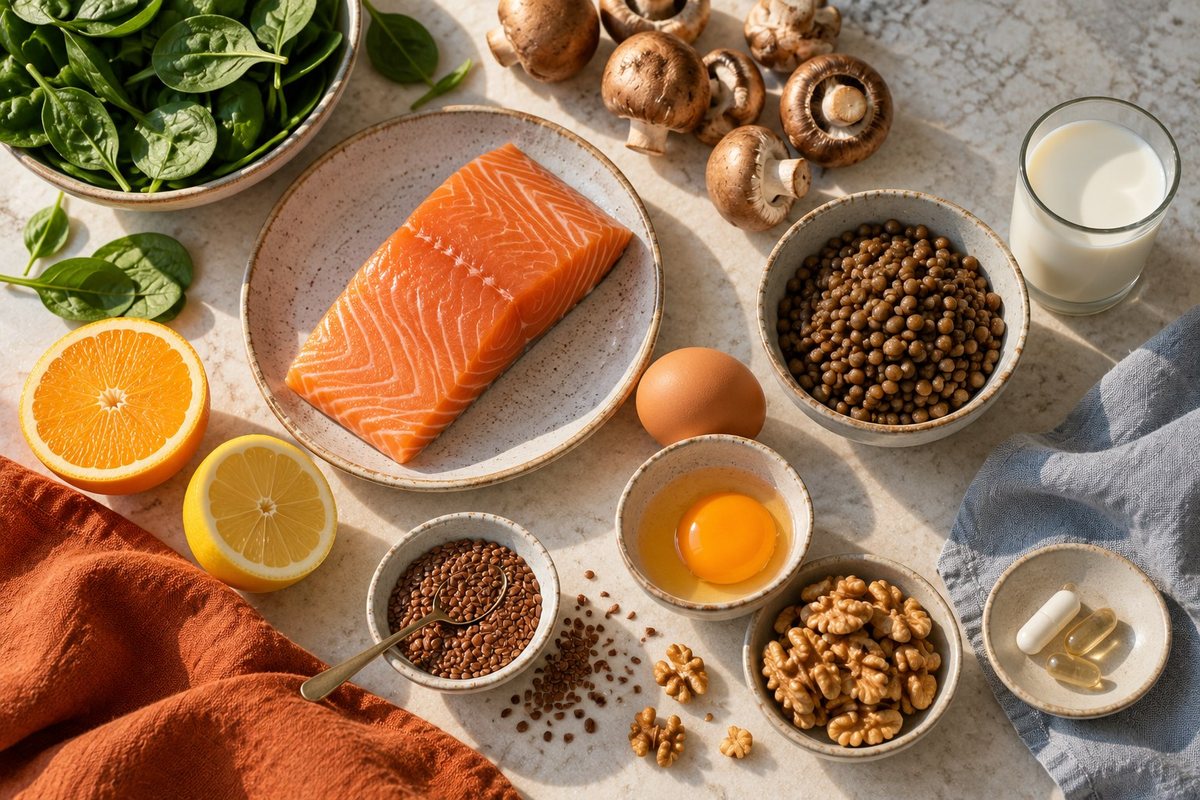
- Look at your plate. Fish twice a week, eggs or dairy, leafy greens, beans and some fruit cover most of what a supplement shelf promises.
- Get the right blood tests. Vitamin D, B12 and ferritin (iron stores) are the usual ones, and only when there's a reason. We wrote a separate guide on which blood tests to get in your 30s.
- Let your DNA point the way. Some common gene versions go with lower vitamin D (GC, CYP2R1), lower B12 (FUT2), weaker conversion of plant omega-3 into the fish forms (FADS1, FADS2), or storing iron too well. They don't tell you what to take; they tell you which test is worth doing first. More in what you can do with your raw DNA data.
Can your AI help you plan?
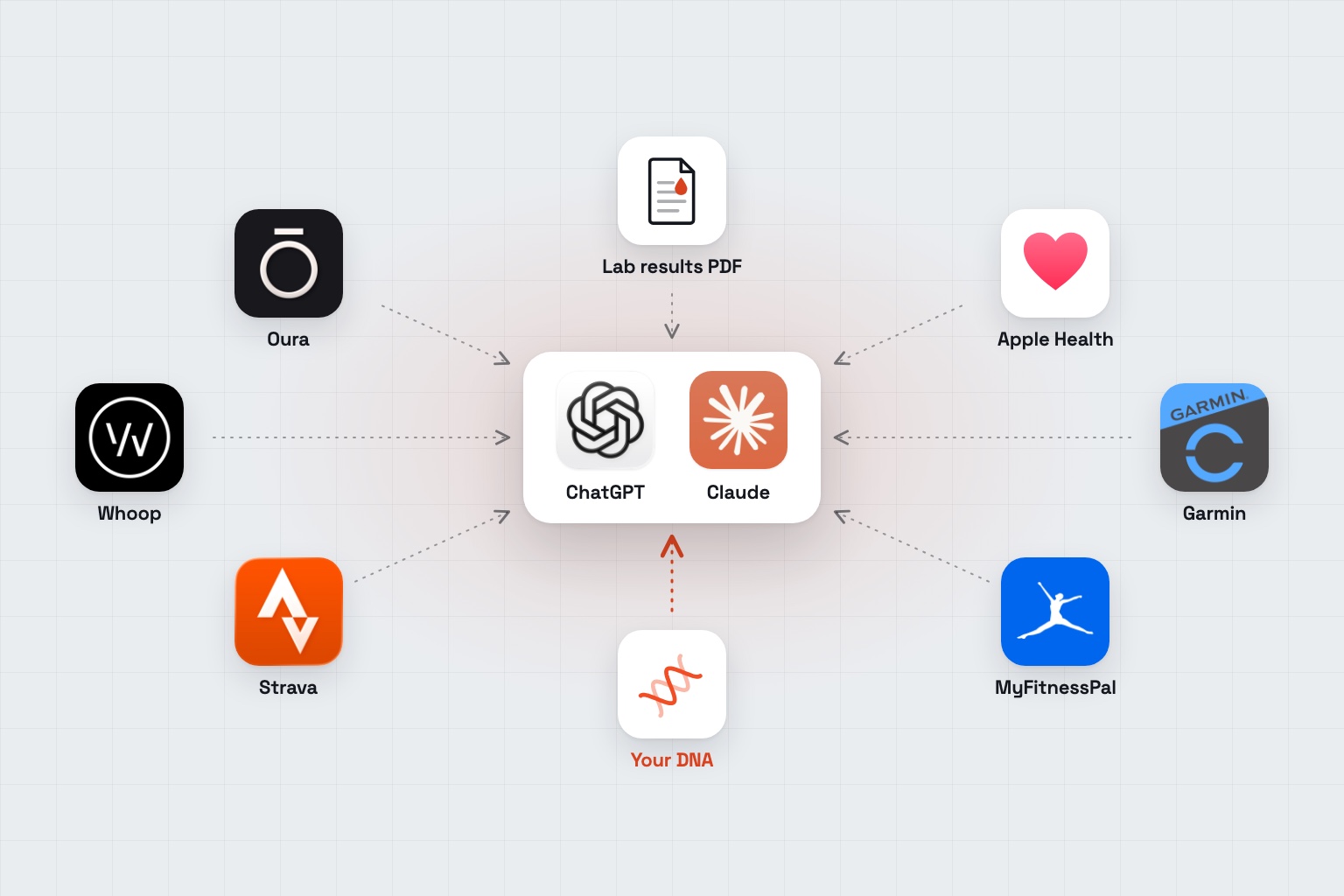
Yes, and this is where it shines. Give your own AI your blood test results and your DNA report, and ask something like:
- "Based on my results and my genes, which nutrients look low, and what foods would fix that first?"
- "Do I need any supplement at all, or is this a diet change?"
- "Make me a one-page list of questions for my doctor about these numbers."
Then check the plan with your doctor before you start anything, especially if you take medicine or are pregnant. Doses are their call, not a chat's.
Sources
- US Preventive Services Task Force. Vitamin, mineral, and multivitamin supplementation to prevent cardiovascular disease and cancer, 2022. uspreventiveservicestaskforce.org
- Manson JE, Cook NR, Lee IM, et al. Vitamin D supplements and prevention of cancer and cardiovascular disease (VITAL). New England Journal of Medicine, 2019. PubMed 30415629
- US Preventive Services Task Force. Folic acid supplementation to prevent neural tube defects, 2023. uspreventiveservicestaskforce.org
- Demay MB, et al. Vitamin D for the prevention of disease: an Endocrine Society clinical practice guideline, 2024. PubMed 38828931
- NIH Office of Dietary Supplements. Vitamin B12 fact sheet for health professionals. ods.od.nih.gov
- NIH Office of Dietary Supplements. Vitamin A and carotenoids fact sheet; Vitamin B6 fact sheet. ods.od.nih.gov