 CYP1A2
How long does caffeine stay in your system? A calculator and the honest answer
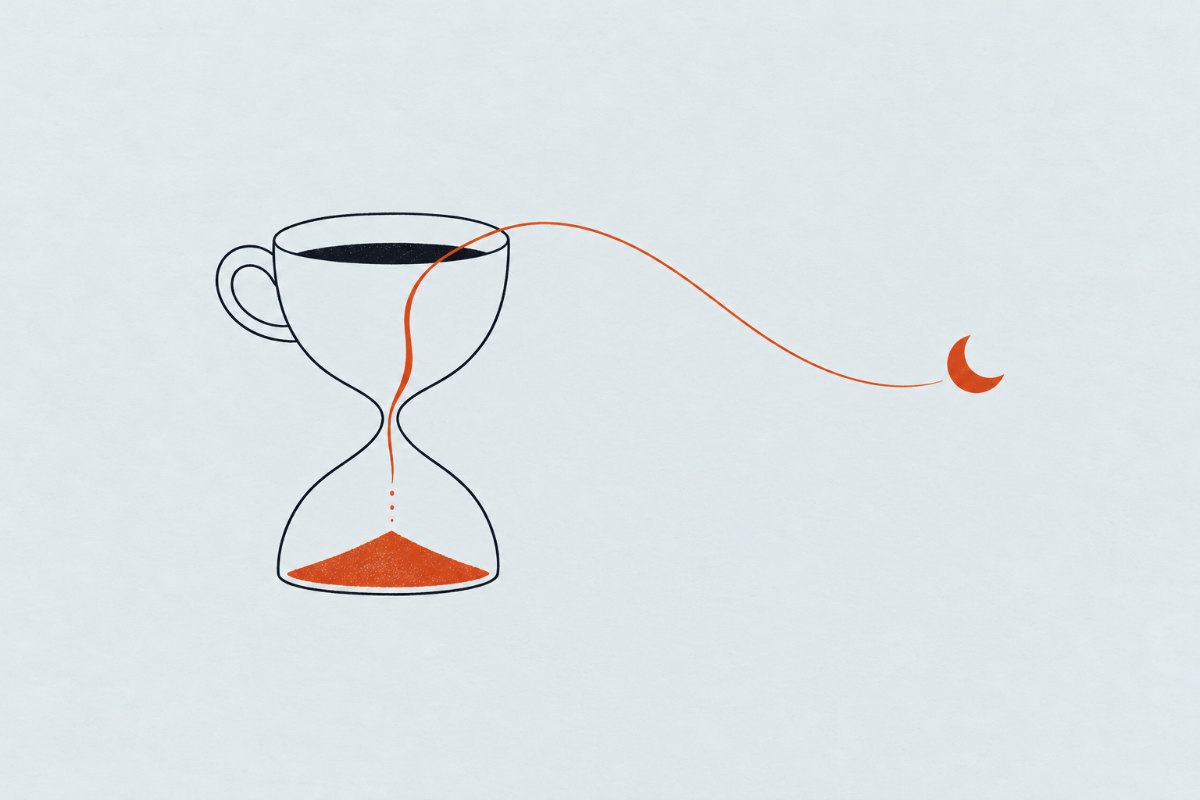
A 3 p.m. latte feels long gone by 11. It is not. Caffeine leaves the body by halves: about half is gone five hours after the cup, half of what is left five hours after that. A 150 mg coffee at 3 is still a 50 mg drink at bedtime, roughly a can of cola, sitting on the brain receptors whose job is to make you sleepy.
How much caffeine is still in you at bedtime?
An estimate, not a measurement. Typical adult half-life 5 h; smoking about half, hormonal birth control about double, late pregnancy up to triple, CYP1A2 a small shift. Some medicines slow clearance a lot: ask a pharmacist.
Why it leaves by halves
Caffeine does not wear off on a timer. Your liver breaks it down at a steady rate in proportion to how much is there, so the amount halves, then halves again. Scientists call the time for one halving the half-life. In a typical adult it is around 5 hours, but the range between people is wide, from about 3 to 10 hours, and almost all of that range comes from a handful of things you can name.
What changes the speed
The enzyme that does the work is called CYP1A2. Anything that revs it up or slows it down changes your half-life.
| What | Effect on half-life |
|---|---|
| Smoking | About half as long. Smokers clear caffeine fast, which is one reason they drink more of it |
| Hormonal birth control | About twice as long |
| Pregnancy, later months | Up to three times as long |
| Some medicines (fluvoxamine, some antibiotics) | Much longer. Ask a pharmacist |
| Your CYP1A2 variant, rs762551 | A small shift. People with the AA version run a bit faster, mostly when the enzyme is already revved by smoking |
The gene is the one people ask about, and it is the smallest row in the table. If you quit smoking, your caffeine half-life roughly doubles within days; no gene does that. We wrote a separate article on CYP1A2 with what the studies actually found.
How close to bedtime is too close
Two numbers from the research. In a sleep lab, 400 mg of caffeine, about two large coffees, taken 6 hours before bed still measurably disturbed sleep. And when 24 studies were pooled, a standard cup of 107 mg needed about 9 hours before bedtime to leave total sleep time alone; a pre-workout serving of 217 mg needed 13.
A fair rule: the last regular coffee by early afternoon if you go to bed at 11. If you must have one later, make it small, or decaf, which still carries a few milligrams.
What to do with the calculator
Set your usual drink and the time you actually have it, then your bedtime. If the "still in you" number is bigger than a cup of green tea, about 30 mg, move the drink earlier or make it smaller and watch the line drop. Then tick the boxes that apply to you. The pill and smoking move the line more than any genotype will.
Your caffeine genes, found in a minute
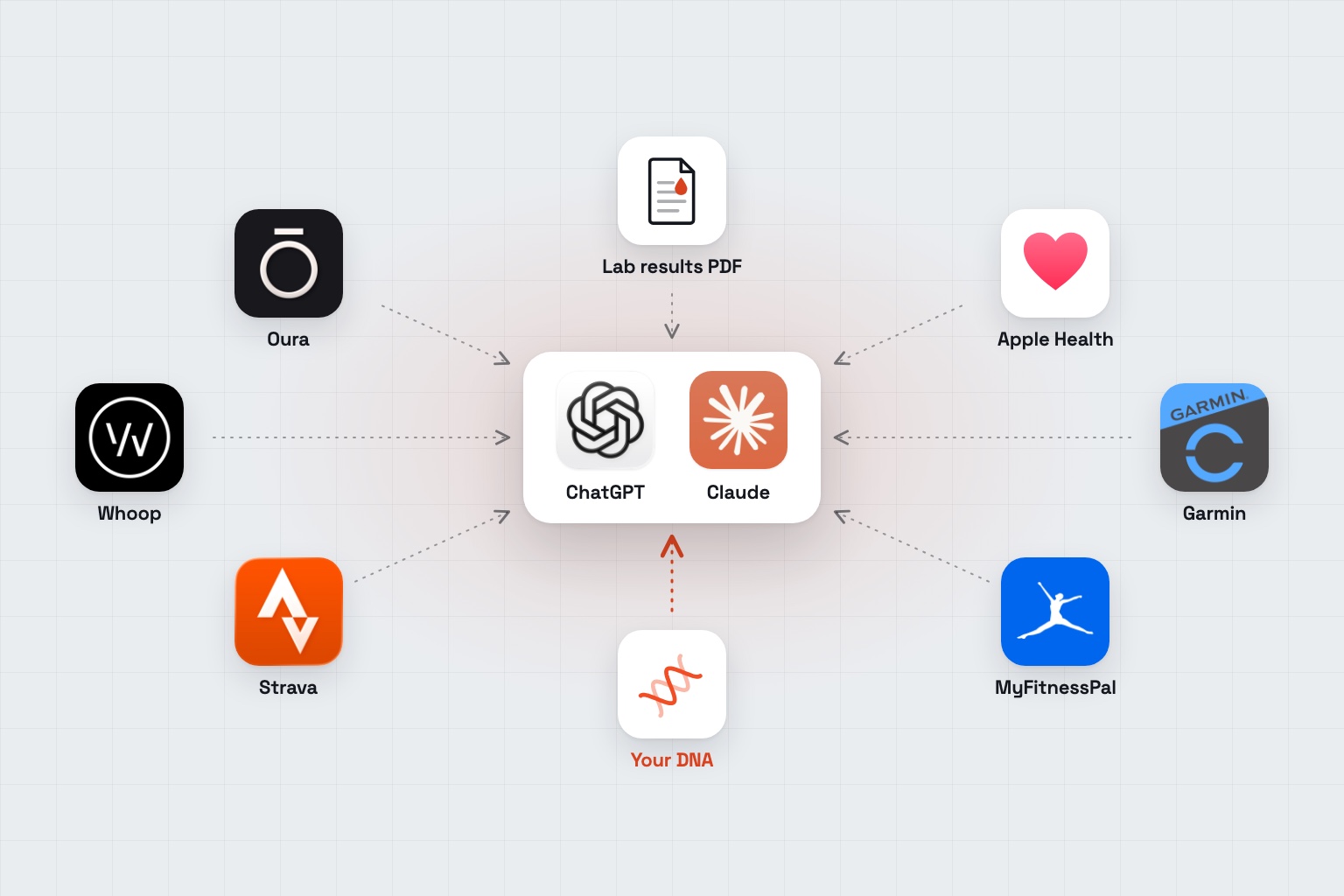
Your DNA file holds the CYP1A2 marker, the ADORA2A markers behind caffeine jitters, and the body-clock markers that decide whether an evening coffee lands on a lark or an owl. You can search the file by hand; the free first look reads them all for you.
Sources
- Nehlig A. Interindividual differences in caffeine metabolism and factors driving caffeine consumption. Pharmacological Reviews, 2018. PubMed 29514871
- Gardiner C, Weakley J, Burke LM, et al. The effect of caffeine on subsequent sleep: a systematic review and meta-analysis. Sleep Medicine Reviews, 2023. PubMed 36870101
- Drake C, Roehrs T, Shambroom J, Roth T. Caffeine effects on sleep taken 0, 3, or 6 hours before going to bed. Journal of Clinical Sleep Medicine, 2013. PubMed 24235903
- Sachse C, Brockmöller J, Bauer S, Roots I. Functional significance of a C-to-A polymorphism in intron 1 of the cytochrome P450 CYP1A2 gene tested with caffeine. British Journal of Clinical Pharmacology, 1999. PubMed 10233211